Edible Food Recovery–SB 1383
Edible Food Recovery Microgrant
The cities of Citrus Heights, Elk Grove, Galt, Folsom, Rancho Cordova, Sacramento, and the County of Sacramento have developed a regional collaboration, Capital Food Access Alliance. The Capital Food Access Alliance is releasing Edible Food Recovery Microgrants to help local organizations expand their capacity to accept food donations for distribution throughout the community.
Award Amount: Applicants may request a minimum of $5,000 and a maximum of $25,000.
Grant Application Period: Applications accepted June 2024 through November 2024. Applications will be reviewed once per month. Notifications of award will be provided on a rolling basis.
Grant Term: 6 Months.
Funds may be used by award recipients for qualified expenditures listed in the awardees approved budget and in accordance with Microgrant requirements. Funds must solely benefit food recovery efforts in the Sacramento County region. This grant does not require matching funds or cost-sharing. Funds will be provided upfront. Applicants do not need to request reimbursement.
Capital Food Access Alliance may extend or reopen the application cycle and launch a larger grants program with higher funding limits. Notwithstanding failure to meet the contractual requirements of a Microgrant agreement, award of an Edible Food Recovery Microgrant does not preclude an organization or business from applying for future grant opportunities with Capital Food Access Alliance.
Please register at capfoodaccess.org/registration/ to access Microgrant information and apply.
What is Senate Bill (SB) 1383?
In September 2016, the State set methane emission reduction target for California in Senate Bill 1383, intended as a statewide effort to reduce emissions of short-lived climate pollutants (like organic waste) in various sectors of California's economy.
SB 1383 establishes statewide target to reduce the amount of organic waste disposed of in landfills (50% reduction by 2020 and 75% by 2025). It also set a goal to rescue at least 20% of currently disposed edible food by 2025 and redirect that food to people in need.
What types of businesses have to comply?
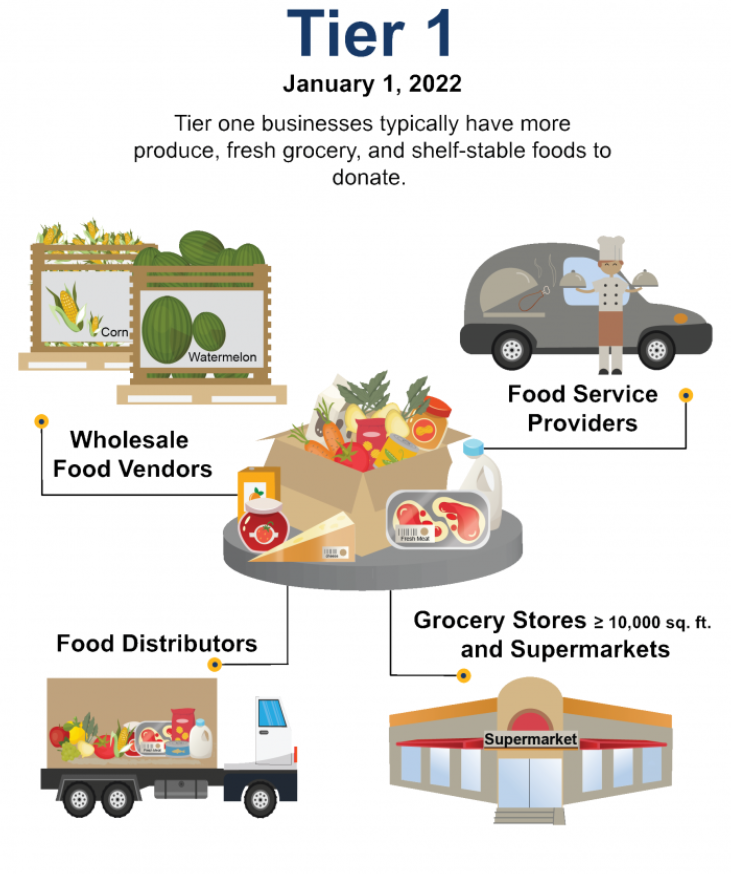
Tier 1
These businesses typically have more produce, fresh grocery and shelf-stable food to donate. Examples are Wholesale food Vendors, food Service Providers, Food distributors and Grocery stores ≥ than 10,000 sq. ft. and Supermarkets.
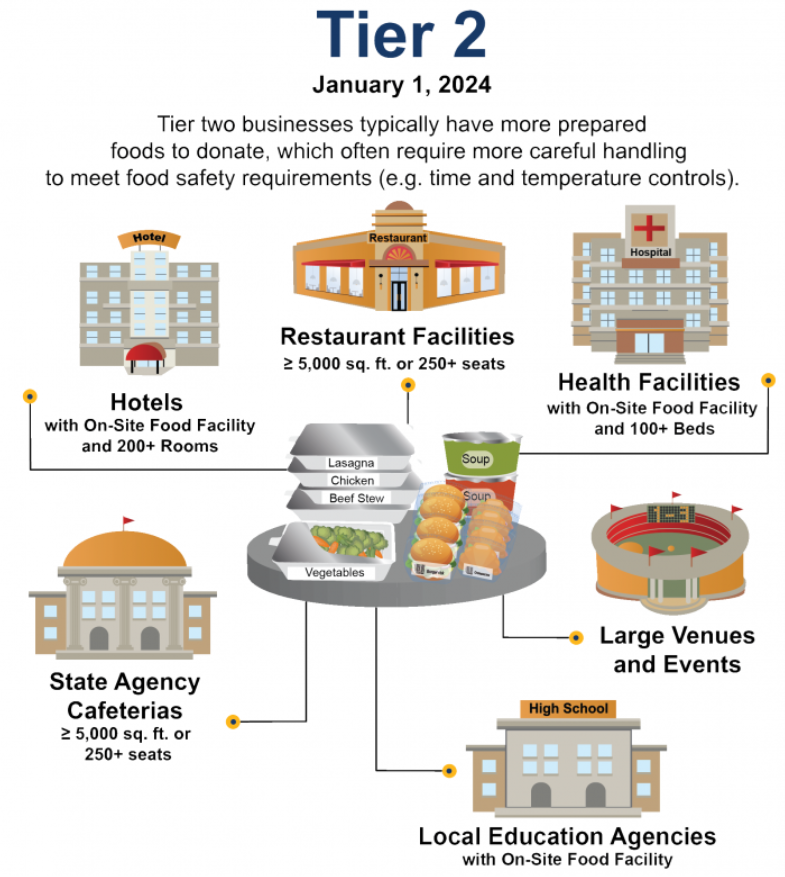
Tier 2
These businesses typically have more prepared foods to donate, which often require more careful handling to meet food safety requirements (e.g. time and temperature controls). Examples are Hotels with On-site Food Facility and 200+ rooms, Restaurants Facilities ≥ 5,000 sq. ft. or 250+ seats, Health Facilities with On-site Food Facility and 100+ beds, State Agency Cafeterias ≥ 5,000 sq. ft. or 250+ seats, Local Education Agencies with On-site Food Facility.
Why recover edible food?
- Save Food: Californians send over 6 million tons of food scraps or food waste to landfills each year, of which almost 1 million tons are potentially donatable, edible food.
- Feed People: Over 9 million Californians (23%) don't know where their next meal will come from.
- Fight Climate Change: Food that ends up in landfills emits greenhouse gases, contributing to climate change.
For more information on SB1383
Workshop Presentations and Outreach
Environmental Health hosted free SB 1383 Edible Food Recovery Workshops for all Tier 1 and Tier 2 Edible Food Generators. California Senate Bill 1383 is a statewide law which aims to protect our environment and strengthen our communities by preventing surplus, edible food from being needlessly tossed into landfills by redirecting that food to those in need.
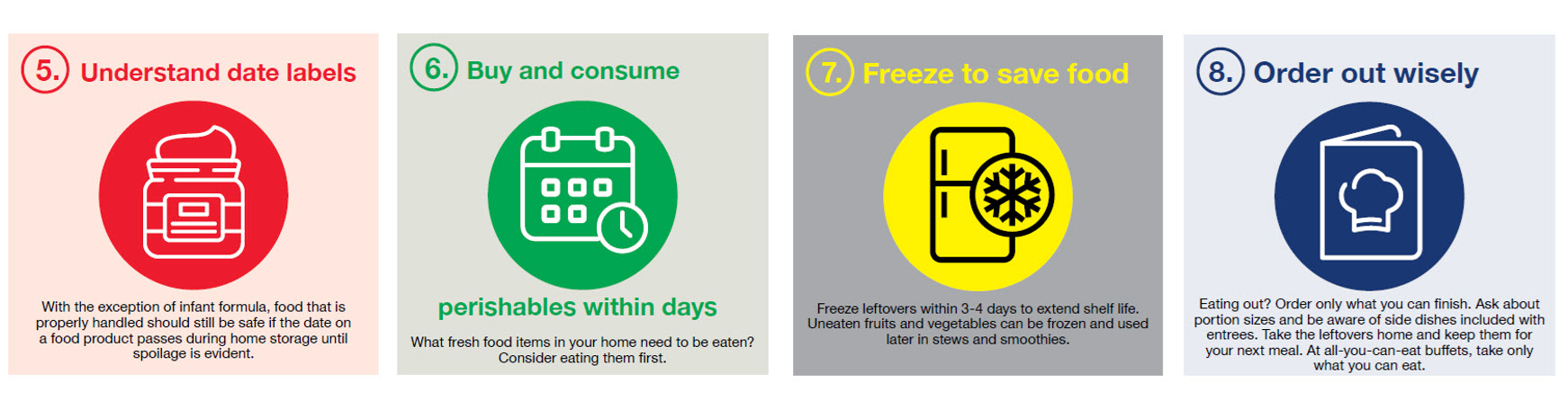
Easy Steps to Reduce Food Waste
Everyone is shopping smarter these days. It is important for the environment to keep food waste out of the landfills where it produces methane, a powerful greenhouse gas.
Use these tips to save on groceries and help the environment
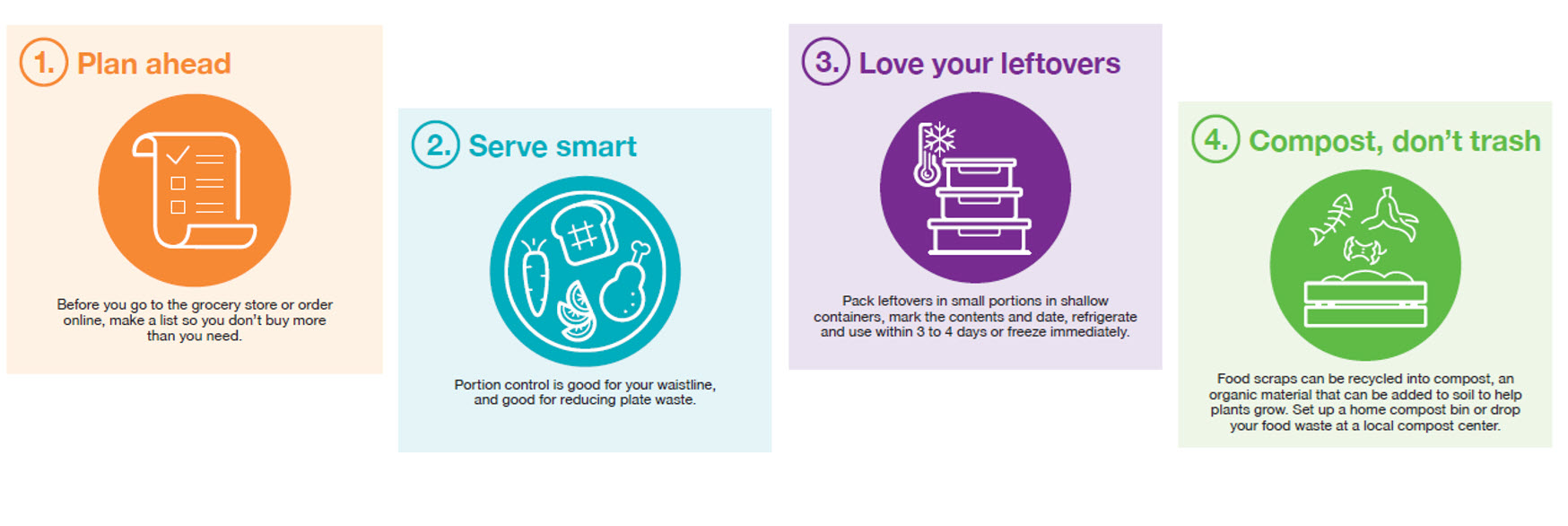
More Easy Steps to Reduce Food Waste
Each year, the average American Family of four loses, $1,500 to uneaten food. Keeping food out of landfills also reduces methane, a hazardous air pollutant that contributes to climate change. With every meal, you can take steps to save food, save money, and reduce environmental impact.
Use these tips to save on groceries and help the environment